
Monitor
Bring essential operating information into one clear view.
- Process readings and equipment status
- Multiple monitoring points
- Device connection status
OUR TECHNOLOGY
We connect sensors, meters, and industrial controllers with local displays and remote platforms—helping your team monitor performance, respond to alerts, and manage operations.
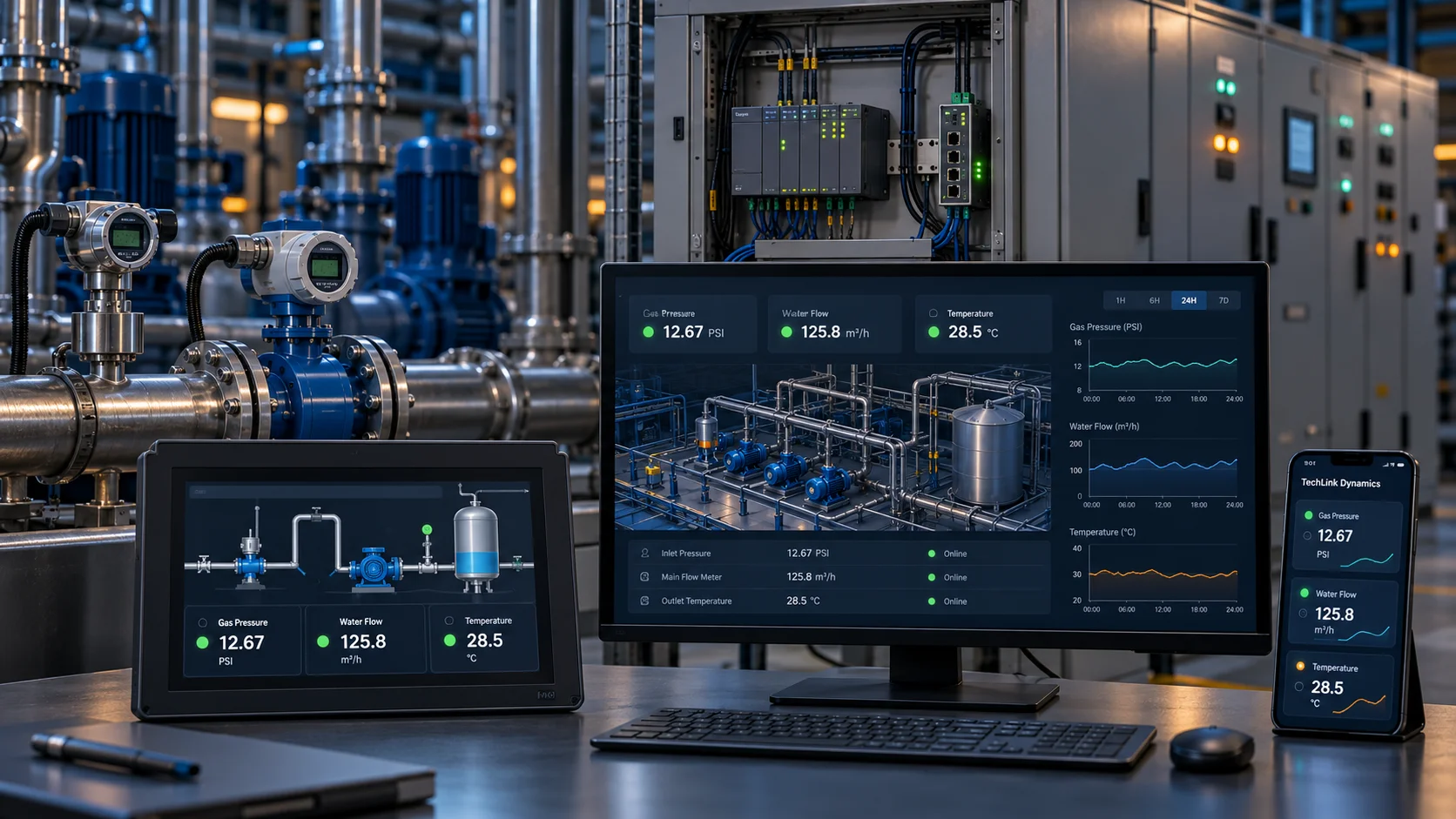
ONE CONNECTED SYSTEM
Each solution brings together field devices, control hardware, and the interfaces your team needs.
Pressure, flow, level, temperature, energy
IoT gateways, PLCs, data acquisition
Local monitoring and control can be designed to operate independently of cloud access. Remote access, data storage, and offline behavior depend on the project configuration.
PRACTICAL CAPABILITIES
Bring essential operating information into one clear view.
Turn collected data into useful operating insight.
Apply control methods suited to your process.
Available functions are agreed during system design.
LOCAL & REMOTE ACCESS
Give operators, engineers, and managers access to the information and controls relevant to their work.
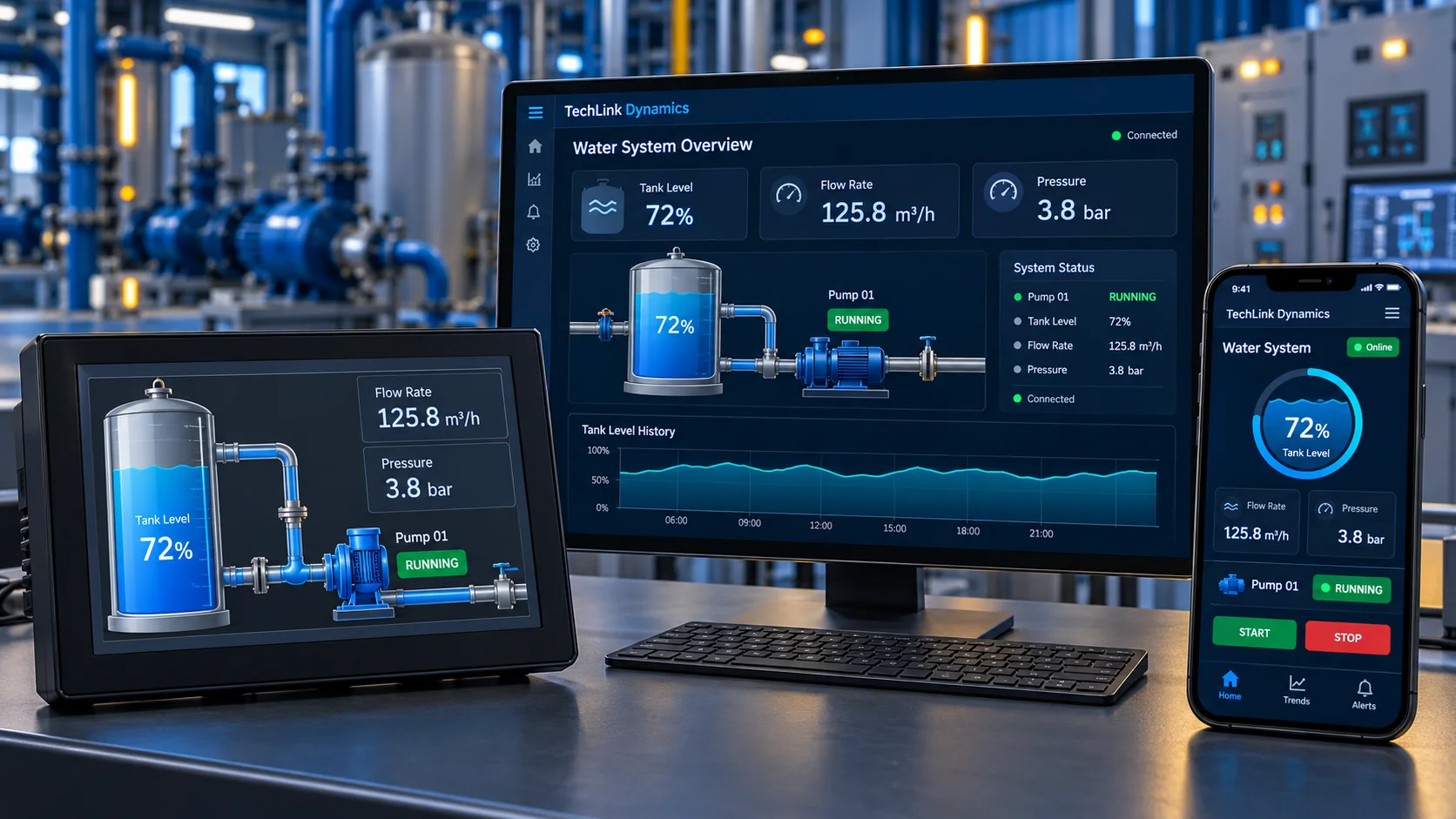
At-machine readings, equipment status, alarms, and operator controls.
A wider view of connected systems, historical trends, and operating information.
Convenient access to readings, alerts, and permitted controls while away from the equipment.
INTEGRATION & CONNECTIVITY
We assess your available sensors, meters, controllers, and communication interfaces to define a practical integration approach.
Bring supported field measurements into the monitoring system.
Connect compatible controllers and implement application-specific logic.
Use suitable communication methods such as RS485/Modbus, Ethernet, Wi-Fi, and MQTT.
Configure on-site interfaces and remote access according to your operating needs.
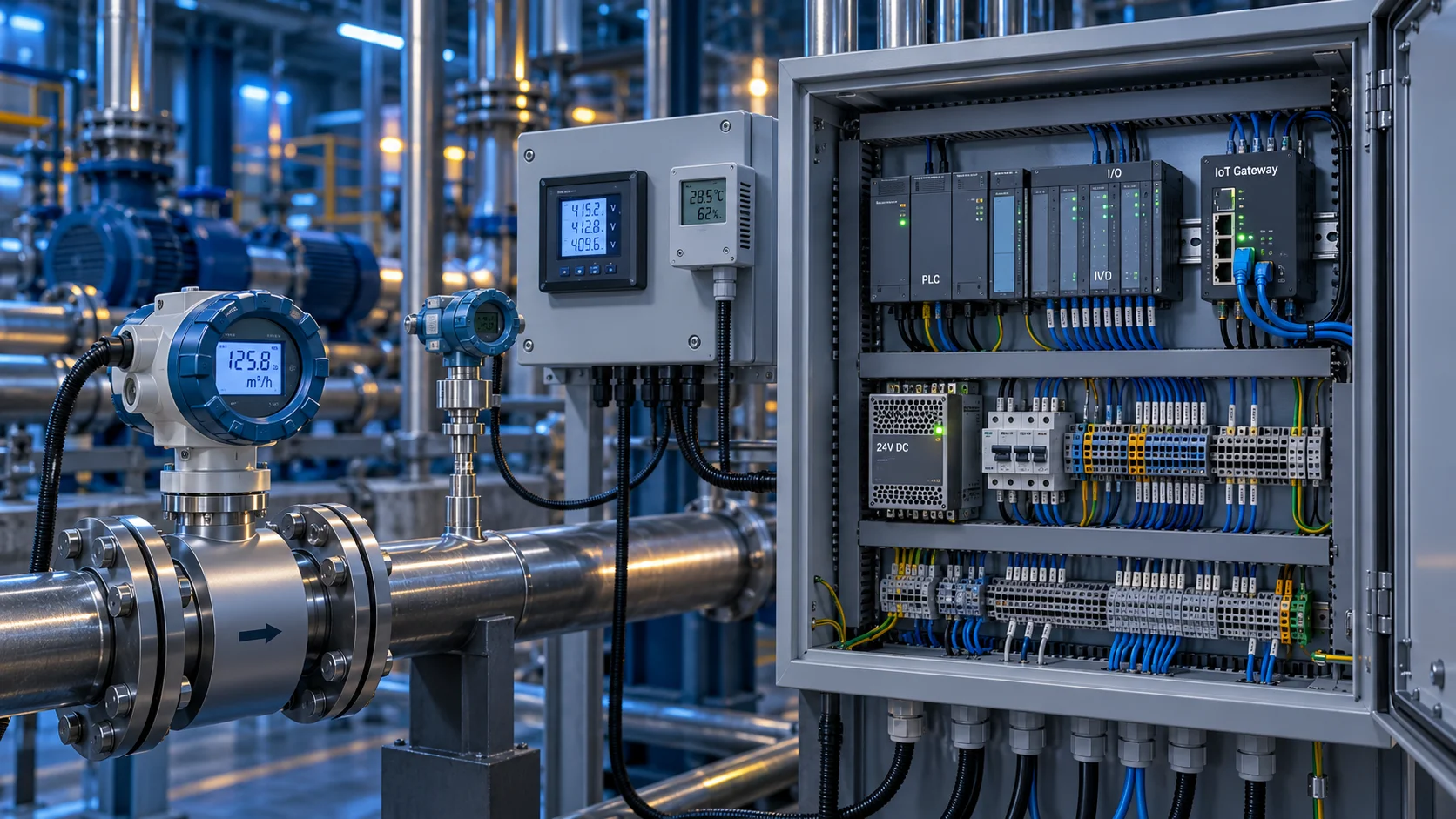
Compatibility is assessed by device model, available interfaces, protocol support, and project requirements.
OPERATIONAL CONSIDERATIONS
Configured during system design to suit your operating requirements.
Define who can view information and operate configured controls.
Help users identify unavailable devices and stale readings.
Agree recording intervals, retention, and reporting requirements for the application.
Define how local operation, data buffering, and reconnection should behave during network interruptions.
Tell us what you want to measure or control, which equipment you use, and how your team needs to access the system.